American Independence: Archipelago Finale — #7

I’m watching a rain storm flood in while sitting in an internet cafe in Phnom Penh as I finish this blog.  It seems like a world away now, the Philippines, and that is the palimpsest beauty of travel.

In the states, I talk often about the importance of community and family.  During travel, I frequently feel quite distant from both.  Though I know that strong communal and famiy ties exist in almost every town we trek briefly through, we remain on the outside.  This is not always easy to take, but I know it’s our rightful place. Continue reading

Posted in Community, Food, Southeast Asia, Travel | Leave a comment

Waiting For the Bus: Leaving Saigon

Is this a scene from The Heart of Darkness rewritten as Apocalypse Now rewritten as Matt and Lindsay Leave Saigon? This question can’t help but pop into my mind as we’re handed our seat numbers on a scrap of paper from a man with a half smoked cigarette hanging from the corner of his mouth, he hasn’t changed since 1972. Phones are ringing as his co-workers scribble down notes on calendars and schedules and account books, so our interaction is cut short.

We find a spot in the passenger lounge (I use this term haphazardly) on a leather bench seat removed from a war-era officer transport jeep, (I’m guessing). Continue reading

Posted in Southeast Asia, Travel | Leave a comment

From this Street Corner: A Moment in Saigon

For Lindsay and I, like Ed Abbey’s love of landscape textures in his Desert Solitaire, architectural surfaces in cities satisfy our wandering curiosities. Since earlier journeys in Europe to this most recent Mekong Meander, walking the gritty streets is our thing.  Sure, we’ll take in the occasional museum, but we don’t seek them out; we’ll enjoy the Presidential Palace, but we won’t stay for too long. Before arriving in the big cities of Vietnam, we read the blog of a local expat who berated his followers to sit down at a cafe to enjoy the city sites.  Loitering for him, not wandering, proved to be the best method for sightseeing. This did not come easy for us to understand. Continue reading

Posted in Southeast Asia, Travel | Leave a comment

A Miscellany: Archipelago – Part VI

A Self Conscious Explanation

We landed in Saigon late last night and my nostalgia for the Philippines just set in as I began reading notes I made during our trek in the non-Asian Asian country.  Though we board a bus in a couple of hours for the border of Vietnam and Cambodia, I feel a deep urge to write more about the Philippines, far more than I have space or time for as we move forward in our time warp on the Mekong Delta. At the very least, I need to dedicate at least two more entries to this enchanting Filipino land. Here I’ll provide a miscellany of snapshots highlighting some of the key features that make this country so unique in all of our travels, and in the next blog I intend to describe the most important element of the Philippines.

Manila and Sagada 

These two towns should never be spoken in the same breath.  They represent two diametrically opposed places.  I try to dedicate my blog to being grateful for the good things. So Manila, I’m grateful we got out alive.

Sagada on the other hand represents tourism done well.  This town feels almost untouched, nestled in a high, quiet valley in the Cordillera. Tourists come and go, enjoying the eco-adventures of hiking and climbing and caving, but the locals don’t focus their lives on travellers.  We are not harassed to buy mass-produced trinkets made in China; we are not yelled at to come eat in restaurants; and even if we wanted to hail a moto or a tuk-tuk, there are none around . . . this town is made for walking, for exploring the inside of the earth in mystical caves while wading through refreshing underground streams, for eating homemade yoghurt at every meal, for just existing as a human being in the arms of a distant people in a distant place.

Mirienda and Filipino Fare

There should be more Filipino restaurants in the U.S.  Period. The food here is far better than expected. Now, maybe this is because they have this incredible time of day called Mirienda. Mirienda happens twice a day and it’s described as “snack time,” which is really just a clever way of having five meals a day.

At mirienda you can dine on the local noodle dish Pancit, barbecue pork skewers, rice with a spicy soy sauce and/or (depending on your hunger level,  so mine is always “and”), the ever famous, vinegary, sumptuous, chicken adobo. Along with countless other dishes, the Philippines is an over-looked, unassuming culinary delight.  Just avoid the boiled pig.

Was that Ringo Star?

We somehow managed to avoid the famous art of Karaoke while in the Philippines.  Lindsay and I remain distraught that we didn’t perform the classic duet “I Got You, Babe,” but the island country will just need to wait patiently for our triumphant return as Sonny and Cher.

Second to Karaoke though, the Philippines loves, adores, cherishes, its cover bands.  In the matter of two nights we heard one band cover everything from Paul Simon to Frank Sinatra to ACDC, while on the next night a band covered early Beattle’s hits for nearly two hours.  And these are not lounge singing annoyances . . . these acts, both vocally and instrumentally, cover classic songs with beautiful precision.  For obvious reasons, the current lead singer of Journey is from this land. And I won’t be surprised if a resurgence of 80s hair bands or psychodelic protest music doesn’t come our way from the locals’ ability to perfectly impersonate just about any rocker known to man in the last 60 years.

Not Another Bus

Remember that mystical place called Sagada I just spoke of?  Well, getting there is not simple, and yes, somehow we ended up on another adventurous ride.  I assume that somewhere in this world a calm, comfortable, cozy bus exists, but I don’t think I’ll be on it any time soon.

For our ride to Sagada, I reached for a sense of comfort from the red light blinking “God Bless Our Trip”  at the front of the bus, but it just never came. I am pretty sure that our driver either ached with a death wish or he was training for a high-speed, mountain bus race.  I serious doubt either, though I still need some rationality for him passing two vegetable trucks on a blind curve with only a foot to spare from plummeting off a sheer cliff.

While not trying to gain peace of mind from the red neon blessing at the front of the bus, I gazed out the window at peak tops coated in fog like a mystical scene in middle earth.  And vegetable terraces climbed with grace up hillsides, built by humble human labor. This is the great dilemma with dangerous, difficult bus rides: the windier, steeper, bumpier, clunkier rides are always back-dropped with the most stunning scenery.

Without Our Guide

Finally, we must give our dear friend Sherry, our guide in the Philippines, a big huge public thank you and shout out.  Without her, we are lost.  The minute she put us on a taxi bound for the airport, we got scammed.  The taxi driver of Manila managed to tweak the meter in a sneaky sort of manner and over-charged us for our ride, not by much, but I’m glad I didn’t buy that 50 cent ice cream earlier in the day.  So Sherry, thanks for keeping us safe and showing us your incredible world.

Posted in Food, Southeast Asia, Travel | 1 Comment

Jeepneys: Archipelago – Part V

At 5 pm we’re on a Jeepney bound for Baguio City when four men jump aboard.  One sits rather close to me, almost in my lap.  He’s smiling and laughing with his friends and turns to me to begin making conversation.  I’m really still not sure what he was asking me in English, but I know if I’ve been drinking with my friends on a Friday afternoon, no one can understand me either.  So I forgive him and join in the conversation.  Sherry, sitting across from me, just laughs . . . this is a regular experience I suppose.

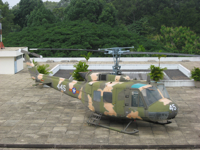
Now, you might be asking, what exactly is a Jeepney? Jeepneys are one of the most unique elements of the Philippines.  I’m not exactly sure where they came from, or who invented them, or why I’ve never seen them anywhere else in the world . . . they are just plain cool. Jeepneys are the main form of public transportation around here . . . convenient, frequent and funky. They have the hood and the front body of  a large jeep with a military-truck bed for a personnel carrier, only with a lower ceiling.  Passengers sit in two rows facing one another, sometimes quite snugly during rush hour. Rumor has it that they evolved from U.S. and Japanese surplus after the wars around here in the 20th century.

That might explain the vehicle style, but certainly not the paint jobs. Each Jeepney’s exterior is adorned in bright, colorful paint, (imagine a 1970s VW bus bound for Burning Man) sometimes depicting Christmas snow scenes or local landscapes or the ever famous Cordillera Cowboy. And the hood decor almost always shouts praises to Jesus or the Virgin Mary, or announces the name of that particular Jeepney: “Daddy’s Ride,” “JaMan,” and my favorite, “Out of Control.”

We are not out of control on this particular ride, but at the next stop my new friend climbs out of the Jeepney laughing and asking me to join his crew.  Their aroma of fried fish and fermented alcohol (an undistinguished character . . . maybe gin? maybe a local grain alcohol?) and tobacco, I think, lures me for a moment, but I decline respectfully. Instead, I sit back on my Jeepney bench, chuckling of course, as the mountainous countryside rolls by out the window, and the aroma of cocoa-coffee and port-a-pottie infused diesel exhaust replaces the scent of the Filipino happy hour.

This is the way to travel.

Posted in Southeast Asia, Travel | 1 Comment

Cockroach Relativity: Archipelago – Part 4

I want to thank the late Jerry McCampbell, my high school physics teacher, who taught me about the theory of relativity during my junior year.  I always feel somewhat bad, because I love to bastardize the concept of relativity, applying it to experiences in life instead of just the speed of light.  But since my 16 year old mind grasped the concept, I’ve found it to work in many places, especially while traveling and trying to understand these new lands.

For Filipino cockroaches, relativity helps ease my anxiety and my screechish scittish reactions.  On our first night in the Cordillera, two cockroaches adorned the porcelain thrown like gargoyles at Notre Dame. It took some courage, but I used a book mark to skurt them away.  And I surely screeched under my breath.

Were these a sign of an unclean place? Of filth? Of human habitation with earth’s most vile creatures?

On the third and fourth nights here in the highlands we went camping, and as we strolled on to the tent decks for our evening slumber we found the platforms crawling with cockroaches.  Okay, so this wasn’t an Indiana Jones snake pit, but a solid pack of a half dozen slimy, flying, little nasties lurked about the entrance of our mesh sleeping quarters.

And that’s when I realized it: cockroaches are a relative creature.  Where I grew up, cockroaches were an anomaly, appearing at times of unkept homes on T.V. and on rotting trash in alleyways. A cockroach, and its many friends here, is simply just a way of life, they’re just another insect like a beetle or a mosquito or a fruit fly.  Roaches are not a sign of the unclean or filth, they just happen to thrive in these wet, jungle environments.

Coexistence is a must.

Now try explaining this to Lindsay after reading her blog on this coexisting creature: http://www.travelpod.com/members/lgmcnicholas

Posted in Southeast Asia, Travel | Leave a comment

ENCA Farm: Archipelago – Part 3

There are places we dream of though we’re not sure they exist: candle lit homes, well taken care of land, indigenous organic farming that supports local food movements, consciousness about earth and water and air, quiet conversations under full moons and cicada songs, freedom to sit and think and breathe fresh air, fields of green and greener hills.

In the west, we talk poetically about land stewardship and living with the earth, but we are often far from it.We rage at politicians for their lack of environmental protection reform, but we rarely tread that lightly in our own travels. We blame parents who fill their children with fast-food propaganda and insecticide-herbicide-fungicide cocktails, but we soon enjoy that same In-n-Out sandwich.

Then suddenly we find a family protecting a little patch of earth, tucked away in a hidden and unfamiliar country. We discover their care and concern for the topsoil, for the watershed, for the free-range animals and composting soil. We realize they want to open this land up for others to visit, to see, to believe, to share in the human experience of tending the earth with tenderness. This is ENCA Farm.

This is ENCA Farm, a place I found rest and relaxation; a place that was our dear friend Sherry’s home for more than two years; a place that has obvious importance for the family who owns the farm, for their Auntie Olive that runs the farm, for the workers who care for the fields.  Important for them, yes. But ENCA Farm is a symbol of hope, a gesture that true compassion for the earth, and the possibility to live with the earth in harmony, can occur.

ENCA Farm is not just important for the Cosalans and for the Philippines. ENCA Farm is important for our world.

Please check it out: http://www.encaorganicfarm.com

Posted in Southeast Asia, Travel | Leave a comment

“This is the Toilet”: Part 2 of the Archipelago

I pride myself on my adventurous spirit, my willingness to try new things, my arrogant belief that I possess the ability to detach from creature comforts.  Heck, I once went on a three week backpack and only bathed in the ice cold waters of the Sierra Nevada snow melt. I can handle anything.

After a lovely bus ride from Manilla up to Sherry’s Peace Corps site in the Cordillera (the Philippines’ highlands/mountains), I felt quite confident in this next leg of our adventure. Sherry began to show us around her home stay and now our accommodations in the small town of Tublay.

“This is the pull-out couch where we’ll set up a bed for you.”  No worries there. “This is the kitchen, and we keep food in this cupboard, because of bugs.” Makes sense.

“And we do dishes here, but there’s no running water so there’s a little different method to cleaning them.” Like camping, easy.

“There isn’t a refrigerator, but Auntie Evelyn [Sherry’s home stay mom] doesn’t keep any perishables.” Still not sure why, but no big deal.

“And here’s the bathroom.”  Oh, I got this one.  There surely won’t be a shower curtain . . . but we’re now use to water spraying over the sink and the toilet and well, the whole bathroom becomes the shower, and that’s fine.

“But that shower head, it doesn’t work.” Oh? “So you just fill this bucket and use this cup to rinse yourself off.”  Oh. Uh. Okay. “And remember there’s no water in the house right now, so just go fetch some from the spout outside.” Right, that’s what that was . . . it wasn’t the garden sink.

“And this is the toilet.”  Looks normal. “You take this same bucket, fill it with water and pour it into the toilet when your done for a good ole’ gravity flush.” Sherry smiles.  I try to, but more than anything, I’m simply humbled.

No running shower with endless hot water?  A toilet that only flushes with a little human effort, a look at your own ‘movement,’ and good ole’ gravity? And Sherry did this for two years? I’m just not as cool as I thought.


(Sherry, our wonderful and patient guide, blogs about this trip and all her other adventures in the Philippines at: http://www.travelpod.com/z/sherrypace/4/1310773673  Check it out!)

Posted in Southeast Asia, Travel | Leave a comment

A Philippines Archipelago: Our Guide

A Note to Readers: Not writing in nearly a week has caused some distress.  We have been on the move and in relatively remote areas, providing relaxation, a lovely change of pace, and a different mode of travel.  The distress comes with the back log of observations and thoughts and linguistic concoctions that my blog seemingly releases through my esoteric, wordy ramblings.  There’s a danger now to spout even longer entries, but in an attempt to quell my usual verbosity, I hope to write a series of snapshots that will capture the magic of the past week here in the Philippines.  And I figured using the metaphor that this 7000 + island archipelago provides would help. Or maybe sometimes I just think it’s cute to be clever.

So our guide . . . On this leg of the trip we have happily relinquished our route finding, map reading, hotel deciphering and all around pace setting to our dear friend Sherry Manning.  Some of you may know her best from her crowd pleasing rendition of Ice, Ice Baby. And though her singing skills are surely an asset, we’ve chosen her as guide because she spent more than two years here in the Peace Corps and has returned on more than one occasion to continue her work here with a local family and their incredible organic farm (more on this in a future post). She also willingly flew all the way from Washington State to meet us and show us around this complicated and incredible country.

She has humbly provided color to our week here and we are extremely grateful. And by color, well, I mean that quite literally.  We arrived at the airport last Sunday morning at 4:30 am, picked up our bags, went through customs and headed out to the pick-up area.  In these situations, I always worry that we’ll miss the person there to pick us up. But not on this occasion.  Sherry was quite easy to spot, wearing head-to-toe orange (she found an incredible orange sun hat at Target which she sported with enthusiastic, ex-pat confidence and panache).

In a quick stride, she spoke to the taxi driver in one of many dialects that continue to impress locals here, and then whisked us off to the Peace Corps Pension in Manilla, (a place that has maintained its character since the Peace Corps started in the early 60s). From there she toured us around Manilla, including an incredible fish dinner which she bartered for at the fish market and found just the right restaurant to cook our fresh catch for us in three different, delicious, local styles.  At that point, Lindsay and I sat back in amazement and we have enjoyed the ride ever since.


Posted in Southeast Asia, Travel | 1 Comment

Traveling Contrasts

So I can write about runaway bus rides and free wheelin’ moto drives and the beauty of a quiet morning and plates overflowing with food and taste. But is this the true depth of travel, or just the romanticized adventure? My mind rolls in a constant battle with the ethics of travel and the way we spend our time. 

When we disembarked from the bus that caused a bit of insanity, our feet landed in the beach resort town of  Nha-Trang (which will soon be known the world over like Fiji and Hawaii and the Carribean).  I worried that this would be a laid-back, mellow time on the beach, with maybe even a booze-cruise to the islands . . . hell, maybe two. And that such a way of spending my time would cause guilt, or at least circumspect questioning.

We wandered to a high-rated spot for breakfast, Lanterns, and of course within moments, it was clear that our lounging three days would not be so, well, easy, I guess. As we ate our late breakfast the wait staff prepared more than a hundred to-go meals in containers which we figured were for a catering gig. And then we read the laminated advertisement on our table.

It turns out that Lanterns is owned by an Australian and operated by local Vietnamese.  All of the profits go directly to four orphanages in the surrounding countryside or to handing out meals three times per week to the local workers on the street (those styrofoam containers we thought were headed for a business luncheon). And guess what? Customers could help if they pleased.

 So we inquired about how we could join in, and not to ease the guilt of my bleeding heart (I know that a couple hours of volunteering does little in the way of capacity building or true impact) but to see the inner-workings, the backbone, the heart of a city built for international beach tourism.

The following day we met Hien, our guide and one of the coordinators of Lanterns’ community-based work back at the restaurant. She immediately wisked us off in a taxi headed towards the closest orphanage located at a Pagoda and on the way we bought a case of fresh nutritious milk as an offering to the teachers and the kids.

Once we arrived at the Pagoda a group of primary age students greeted us with smiles and hugs and outstretched hands (clearly someone who looked like me had been here before and had played a game of dangling one kid at a time up into the air and swinging he/she arround in a broad circle. . . after ten rounds of this, my left arm grew quite tired).  We then toured the newly built classrooms (all built by Australian and American donations in the last five years) which made the falling apart wooden shacks, that were the old classrooms, look even more horrendous. 

And then we went to play with the toddlers. I have held babies before, I have played games with laughing two year olds, I have felt the innocent joy of a child radiating up at me from twinkling eyes. But when one 18 month year old returned to me again and again, holding out her arms to be held and hugged, I felt different, like a father, I suppose.  Then I found out that she had just been brought to the orphanage two weeks ago by her mother who could no longer take care of her, and that the child was 3 years old, not 18 months.

Early childhood malnourishment is not something I had entirely understood before this moment.  Feeling a profound sense of compassion and protection for a vulnerable human being was something I thought I knew, but I hadn’t.  Not until that moment when it was time for us to leave and she clung to me tighter and tighter and I finally had to set her down on her thin blanket and worn-out pillow for her morning nap time. And for us to walk away.

Walking away was one of the tougher things I’ve ever done in my life.  Both because I walked away from her unknown and likely precarious future, and because it took me until the age of 28 to truly understand the precioussness of life. I think it’s this awareness of life, its dangling by a shoe-string, its profound interconnectivity, that reminds us of our deepest human core: that of compassion and love.

Posted in Southeast Asia, Travel | 3 Comments